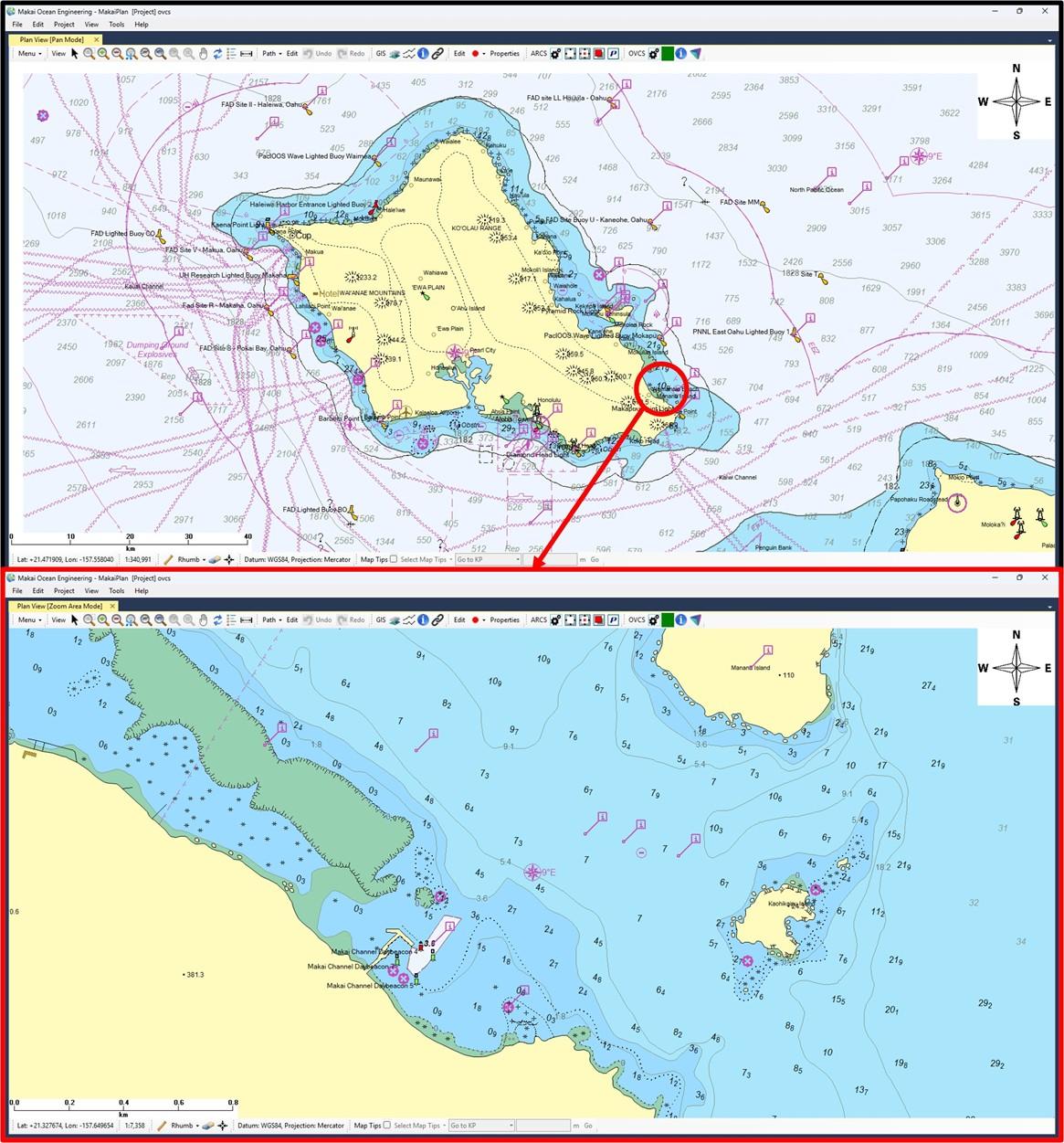
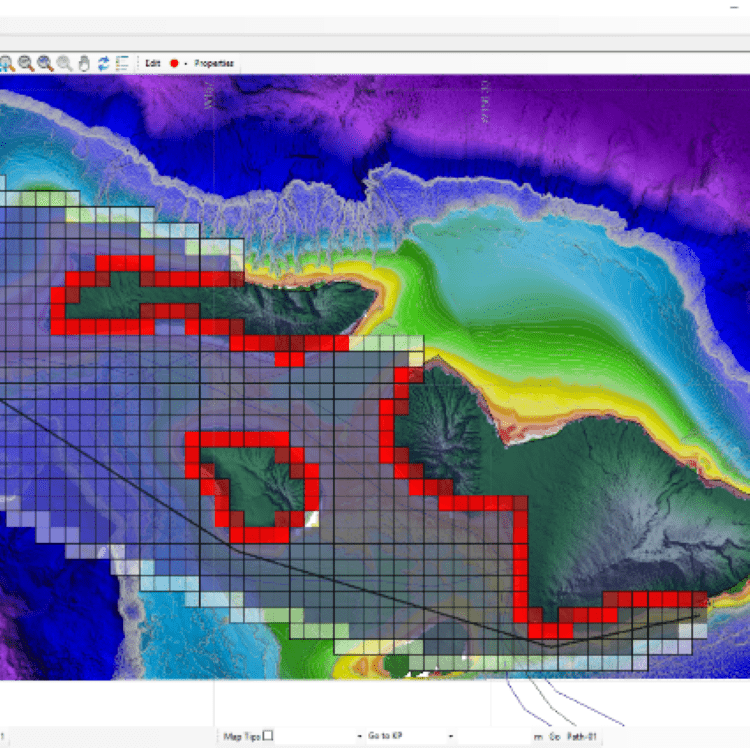
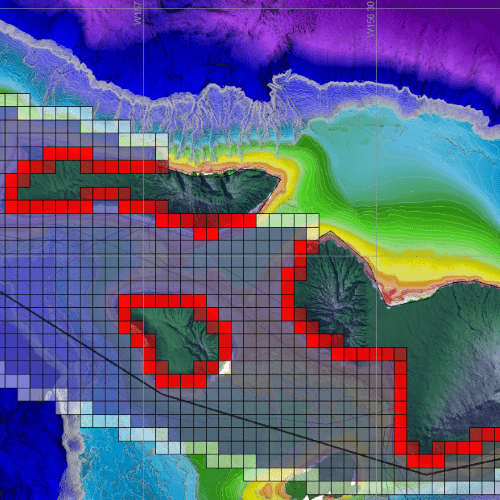
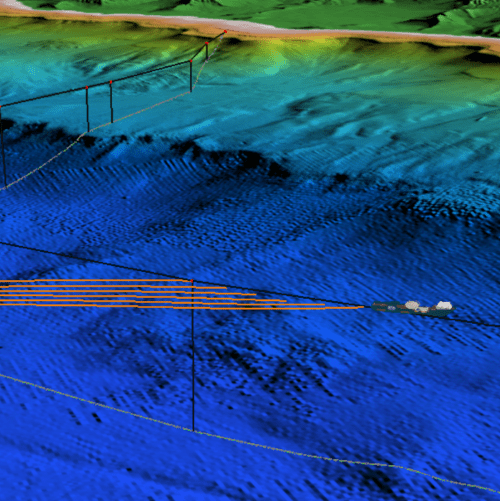
Makai Ocean Engineering, Inc. has released a full-featured version of its Makai Voyager™ geospatial visualization software which enables users to import and visualize their own scientific and GIS data.
Makai Voyager enables users to import, fuse, view, and analyze large earth, ocean, and atmosphere scientific data as it is collected or simulated in a global geo-referenced GIS platform. The key differentiator of Makai Voyager is its level-of-detail (LOD) technology that enables users to stream ‘big data’ rapidly over a network or the web.
Download the full-featured 30-day trial version of Makai Voyager today!
Download the full press release PDF by clicking this link.
New Submarine Power Cable Installation Software – September 2012
Makai Ocean Engineering releases cable control software specifically designed for the subsea power cable industry.
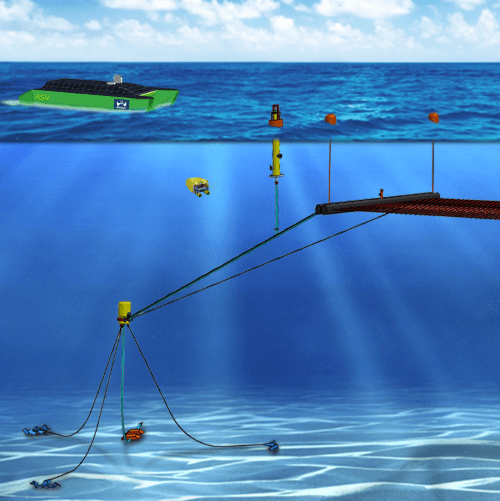
MakaiLay Power allows operators to accurately model the cable shape and bottom tension and touchdown location as it is installed on the seafloor, reducing the risk of damage. This software is particularly useful in mid- and deep waters and for bathymetry with steep slopes where it is impossible to accurately control bottom tension using measured top conditions like top tension and top cable angle. With an accurate picture of the cable conditions below the sea surface, operators can significantly reduce the time, labor & cable material cost, and risk involved in subsea power cable installation, while extending the life of the cable asset.
MakaiPlan 5.0 has been released. With over 250 licenses sold worldwide, MakaiPlan has become the telecommunications industry standard software tool for creating submarine cable routes, defining cables and in-line bodies, editing routes, defining and adjusting slack, and instantly creating RPLs and SLDs. This version represents a major release and includes many new significant features such as:
Support for alternative datums
User-defined buffer zones
Displaying X,Y grid coordinates in RPL
New tool to merge paths
Increase in performance
New Sales- Summer, 2011
Makai has sold MakaiPlan (V4.2) and MakaiPlan Pro (V4.1) to new and existing international clients:
Singapore Telecom, Singapore
Offshore Marine Management Limited, Germany
Nippon Telegraph & Telephone, Japan
U.S. Navy, U.S.A.
MakaiPlan Licenses Sold to Huawei- Spring, 2011
Huawei Technologies Co. purchased five additional licenses of MakaiPlan for a total of ten licenses. As most of the submarine cable planners in the world today, Huawei embraces Makai route planning software as the preferred tool to design submarine cable routes and provide accurate RPLs to the installer. MakaiPlan is a software product which is used to create submarine cable routes, define cables and in-line bodies, edit routes, define and adjust slack, instantly create an RPL and SLD, and estimate system costs.
IT International Telecom purchases MakaiLay with AutoSlack for the cable vessel IT Intrepid – Spring, 2011
IT International Telecom Marine SRL (www.ittelecom.com) has purchased the latest version (4.1) of MakaiLay with AutoSlack for the cable vessel IT Intrepid. A Makai engineer travelled to Curacao, Netherlands Antilles to provide MakaiLay commissioning and training services. MakaiLay is an advanced finite-segment 3D cable installation software that provides cable installers with the ability to lay submarine cables with high placement accuracy and reliability. MakaiLay calculates and displays, in near real-time, the surface and seafloor tension of the cable, the layback distance of the cable, the cable slack and touchdown coordinates on the seafloor, and many other parameters which allow cable engineers to monitor and control the cable installation process. MakaiLay fully integrates the cable laying operations with the cable control room for cable slack/tension adjustments, the plough control room, and the helmsman DP system to modify the vessel track and speed as needed. The software can receive real-time ocean current data from Acoustic Doppler Current Profiler (ADCP) instruments to calculate how the suspended cable and touchdown position are being affected by the ocean currents. Using MakaiLay, engineers can then create a new ship plan on-the-fly to compensate for the effect of ocean currents in order to maintain a high placement accuracy of the cable on the seafloor.
MakaiLay Seismic being used for OBC project in the Red Sea – Fall 2010
FairfieldNodal has acquired and is successfully using two MakaiLay Seismic software licenses to complete an oil survey in the Red Sea for Saudi Aramco. MakaiLay Seismic has been specifically designed to address the new challenge faced by the seismic industry to accurately install and retrieve Ocean Bottom Cables (OBC) in deep waters. The MakaiLay Seismic systems being used in the Red Sea project is using real-time data from acoustic transponders attached to the cable to further improve sensor placement accuracy. This is a very challenging project being conducted in water depths ranging from 30 m to 1000 m and crossing seabed slopes exceeding 55°. In addition to help placing the sensors accurately, the capabilities of MakaiLay Seismic have proven very useful during retrieval operations. By accurately monitoring cable shapes and tensions on the seabed at all times, the system has allowed retrieval with lower seabed tensions, which in turn decreases cable dragging on the seabed and minimizes cable fouling with bottom outcrops which occur very frequently in the Red Sea.
MakaiPlan Licenses Sold to Huawei- Fall 2010
Huawei Technologies Co. purchased five licenses of MakaiPlan with the MakaiFME and the MakaiDTM modules. Makai provided 4 days of MakaiPlan training in Tianjin, China.
MakaiPlan is a software product which is used to create submarine cable routes, define cables and in-line bodies, edit routes, define and adjust slack, instantly create an RPL and SLD, and estimate system costs. The MakaiFME module provides the ability to directly import more than 150 GIS database formats into MakaiPlan. The MakaiDTM module provides users with a tool to accurately process and visualize large amounts of point data collected along an seafloor survey in order to quickly identify any potential hazards for plowing or surface lay operations.
MakaiLay Seismic released- Spring 2010
MakaiLay Seismic is an extension of the successful cable installation software, MakaiLay, developed by Makai Ocean Engineering and currently used by most of the deep water cable installers in the world to accurately lay military arrays, telecommunication and power cables with a high degree of placement and slack/tension accuracy. MakaiLay Seismic has been specifically designed to address the new challenge faced by the seismic industry to accurately install and retrieve Ocean Bottom Cables (OBC) in deep waters. MakaiLay Seismic has the capability to use real-time data from acoustic transponders on the cable and/or real-time current measurements to further improve sensor placement accuracy and retrieval control.
MakaiLay Seismic’s 3-D cable model has been optimized for the retrieval of cables. As a result, the software can now model more accurately the cable-seabed interactions and the cable being dragged as a result of the seabed cable tension. Having an accurate knowledge of the cable conditions on the seabed at all times allows for cable retrieval with lower seabed tensions, which in turn decreases cable dragging on the seabed and helps minimize cable fouling with bottom outcrops and cable abrasion, thus providing longer array life.
MakaiLay Seismic runs on a PC under Windows 7 or XP operating system.
Download Brochure
New Releases of Makai Software Windows®7 Compatible – Spring 2010
Makai has released new versions of the submarine cable software that are now compatible with Windows® 7:
MakaiPlan 4.1
MakaiPlan Pro 4.0
MakaiLay 4.0
Tyco Telecommunications upgrades its cable lay vessels to the latest release of the advanced monitoring and control cable installation software, MakaiLay – Winter 2009
Tyco Telecommunications is upgrading all of its submarine cable laying vessels to use the latest version of the MakaiLay software (version 3.4), taking advantage of new monitoring and control capabilities that have been developed over the past two years by Makai engineers. The MakaiLay software is the most advanced cable lay control system for submarine cable installations in the world.
Twin-line Cable and Array Shape Modeling System- Fall 2009
Makai has received a 5-year, $5mill IDIQ from the Space and Naval Warfare System Center (SPAWAR) for engineering services to complete the development, testing and delivery of a cable and array modeling software system for the Surveillance Towed-Array Sensor System (SURTASS) vessels. The software being developed will allow the Navy SURTASS vessels to accurately determine the shape of towed twin-line arrays during vessel maneuvers resulting in substantial array gain, and improving the ability to track targets. The software product will be initially tested in the laboratory with real-data collected at-sea followed by real-time at-sea operations to test and validate the model’s capabilities before acceptance by the U.S. Navy
MakaiPlan Training Provided to LS Cable- Fall 2009
Makai provided training to LS Cable personnel in the use of the MakaiPlan and MakaiDTM software. As part of the training, detailed route planning was completed for the two, 105 km long power and communication cables connecting Jeju and Jin Islands in South Korea.
Tyco New Purchases- Fall 2009
TYCO TELECOM has purchased three additional licenses of MakaiLay with the Slack Control Module for the CS Reliance, CS Responder, and CS Resolute. TYCO’s entire cable installation fleet now utilizes the advanced MakaiLay submarine cable installation platform. TYCO engineers will be trained in the use of MakaiLay at Makai’s offices in Hawaii during the months of November and December, 2009.
4D Data Fusion & Visualization Tool- Spring 2009
The National Defense Center of Excellence for Research in Ocean Sciences (CEROS) has funded Makai to develop a geospatially enabled, interactive data fusion and 4D visualization tool, which can effectively retrieve data from a remote server and generate geo-referenced outputs for use by the warfighter. The final product will be delivered to the Naval Oceanographic Office.
Development of a Submarine Cable Retrieval and Repair Tool – Spring 2009
Makai has received awards from CEROS and from the U.S. Navy to develop a PC-based software tool for faster and safer retrieval of submarine cables and arrays. This tool, operating on a PC platform and working in a COTS GIS environment, will involve improvements in Makai’s 3D model to minimize recovery tensions, cable dragging and breaks which can occur during repair operations. New graphical user interfaces will be created to assist the engineers with all phases of the repair operation, such as preparing and modeling the grapnel operation, conducting the cutting or hooking drives, recovering, repairing and relaying the cable.
CTC Marine Projects Purchases MakaiLay – Fall 2008
CTC Marine Projects has purchased a full license of the MakaiLay submarine cable monitoring and control system. This software is used at-sea on board their cable laying vessel Maersk Responder to significantly enhance the accuracy and reliability of installing submarine fiber optic telecommunication cables. CTC has also purchased a license of Makai’s submarine cable planning and simulation software, MakaiPlan Pro, which is used to simulate an at-sea submarine cable installation and generate ship plans for use with MakaiLay. These purchases, in conjunction with software training, will provide CTC Marine Projects with the ability to provide their clients with state-of-the-art cable installations.
Global Marine Upgrades & New Purchases – Summer 2008
Global Marine has purchased the full suite of Makai software. A MakaiPlan with the MakaiDTM software and a MakaiPlan Pro software are to be used for route planning and cable installation planning respectively. A new upgraded license of Makailay has been installed on the CS Innovator and a five-day training class for cable engineers was recently completed in Singapore.
Tyco Upgrades & New Purchases- Summer 2008
TYCO TELECOM has purchased a full license of MakaiLay with the Slack Control Module for the CS Decisive and upgraded the CS Durable to the latest MakaiLay with the Slack Control Module. The MakaiLay software provides TYCO with the ability to install submarine cables with a high level of accuracy and reliability by controlling the cable slack and touchdown position on the seabed during the installation process.
MakaiPlan 4.0 Now Available – Spring 2008
MakaiPlan 4.0 is now available and is compatible with Windows Vista, XP and previous versions of MakaiPlan. It works with Geomedia 6.1 and has many new features such as the ability to export paths to Google Earth, "tear off" windows for the Map Legend and Project Explorer, and the ability to zoom in/out using the mouse scroll.
New FME Module – Spring 2008
New FME (Feature Manipulation Engine) add-on for MakaiPlan and Pro provides the capability to import over 150 different formats of GIS data, including S57, digital nautical charts (DNC), Autodesk formats, ESRI formats, MapInfo (MIF/MID) files, and many more.
ASEAN Upgrades & New Purchases – Winter 2007
ASEAN Cableship upgrades their MakaiLay software on the ASEAN Explorer and purchases new Makai software with additional repair features for their cable vessel ASEAN Restorer.
Released: MakaiPlan 3.6 w/Geomedia® 6.0 – Fall 2007
MakaiPlan now works with Geomedia 6.0 bringing many new features to the images and legend. Enhanced image control includes the ability to define a specific color to be transparent, define image translucency, reverse colors, define contrast and brightness, etc. The legend is now a dockable window and is no longer required to be within the map view. Legend features can be grouped and expanded/collapsed as needed. Three new licenses have already been shipped to Tyco.
MakaiLay Level II Training – Fall 2007
Alcatel/ALDA personnel participated in a MakaiLay Level II training course at Makai’s offices in Waimanalo, Hawaii. During the training ALDA engineers provided useful feedback on the new features that should be included in the next version of MakaiLay (expected early next year). Currently, all of their five cable laying vessels have the MakaiLay software suite.
New Software Sales/Upgrades/Leases – Fall 2007
The following companies have purchased new licenses or upgraded existing licenses:
Dynamic modeling of Multi-Line Towed Array Systems – Fall 2007
Makai has received an award from CEROS to develop a real-time, dynamic model of multi-line towed arrays. Navy Surveillance Towed-Array Sensor System (SURTASS) vessels are unable to determine the shape of towed twin line arrays during vessel maneuvers resulting in a loss of array function and the ability to track targets. Makai plans on extending the capabilities of their existing finite element submarine cable model to multi-line towed array systems which would enable SURTASS vessels to track targets during maneuvers.
Deployment Analysis for a Deployable Autonomous Distributed System – Fall 2007
Makai has received an SBIR Phase II award from SPAWAR, San Diego, to conduct deployment analyses on new technology that will result in high performance, persistent, rapidly deployable, survivable, and cost-effective ASW surveillance capability in littoral waters.
Cable Tools for Recovery & Repair – Summer 2007
Makai has received an SBIR Phase I award from the Naval Facilities Engineering Command to develop a submarine cable tool for recovery, maintenance, and repair of US Navy cable systems. An important objective will be to expand the current capabilities of Makai’s software to easily integrate databases in ESRI and other formats.
4D/5D Data Fusion and Visualization – Summer 2007
Makai has received funding from the Office of Naval Research to develop an advanced, PC-based 4D/5D visualization software application to fuse and interactively display large, time varying multi-modal volumetric data sets.
New Software Sales and Upgrades – Summer 2007
The following companies have purchased new licenses or upgraded existing licenses:
Elettra tlc SpA has purchased a new license of MakaiLay for the CS Teleri. This is the same vessel involved in a deployment of the Neutrino detector NEMO (Neutrino Mediterranean Observatory) of which Makai was contracted to develop an original ship plan.
NTT is scheduled to have a MakaiLay training in Nagasaki, Japan and a upgrade to the cable vessel Subaru from the UNIX-based ICS software to the latest PC-based MakaiLay.
Lanai Power Cable – Summer 2007
Makai was awarded a desktop study for a submarine power cable route between the Hawaiian Islands of Lanai and Oahu. The cable would provide electricity generated from a wind farm on Lanai to Oahu residents.
Modeling and Evaluation of DADS Deployment Approaches – Fall, 2006
Makai has received an award from CEROS to modify and improve its cable deployment simulation software, MakaiPlan Pro, to be able to analyze the U.S. Navy deployments of DADS (Deployable Autonomous Distributed System) arrays. The Navy requires that these arrays be deployed from underwater vehicles with specific requirements in terms of placement, orientation and array shape on the seabed.
MakaiLay Version 3.0 Sales – Fall 2006
MakaiLay software continues to be the leader for submarine cable installation software in the Telecom industry. The release of version 3.0 has many new features which has prompted several sales in 2006. Major features include enhanced 3D view capabilities, a top tension control mode, a new Kalman filter for ship speed, an improved 3D finite element cable model for use with multiple applications, and the ability to introduce ocean currents in the model.
ALDA Marine, a partnership between Alcatel Submarine Networks and Louis Dreyfus Armateurs, purchased four (4) upgrades and an additional full license of Makai’s suite of submarine cable planning and installation software. The MakaiLay software provides ALDA with the capability to automatically control the cable engine enhancing their ability to control cable slack and accurate placement of the cable on the seafloor. Alcatel has also renewed technical support for twenty-two licenses of MakaiPlan – the desktop submarine cable route planning software which integrates with the at-sea installation software, MakaiLay.
Tyco Telecommunications upgraded to version 3.0 and purchased the Look Ahead Module.
3D Viewer Update
The 3D-Viewer module of Makai-DTM (Digital Terrain Modeling Tools for Cable Route Planning) has been significantly upgraded. Larger file handling: up to 8000×8000 points. Much faster rendering. Data can be imported using many different formats in any projection. Importation of GIS shapefiles. New Flight Path Recorder. New use of CLOD (Continuous Level of Detail) technology to speed up grid display.
MakaiLay Version 3.0 Sales – Spring 2006
MakaiLay sales include the U.S. Navy, Science Applications International Corporation (SAIC), and Elettra TLC located in Italy.
Successful Submarine Test of Towed Array Sonar at the Pacific Missile Range Facility, Kauai – November, 2005
Makai has developed software that determines the dynamic configuration of a Towed Array Sonar. The Office of Naval Research (ONR) sponsored a software verification test at the Pacific Missile Range Facility (PMRF), Kauai, using a submarine based in Pearl Harbor. The software’s commercial counterpart, MakaiLay, has become a standard in the submarine fiber optic cable installation industry. Recent R&D has resulted in a more versatile software suitable for the Navy’s towed-array needs and other offshore operations including the installation of power cables and flexible pipelines.
Makai and University of Hawaii designing a Geo-Neutrino Detector -Published in Nature, July 28, 2005
In partnership with the University of Hawaii Department of Physics & Astronomy, Makai is designing a deep ocean neutrino detector that will have great value for geophysical science and nuclear proliferation deterrence. Initial funding is from CEROS.
“We have a special opportunity in Hawai’i, due to our location in the mid-ocean, away from all power reactors and above only the relatively thin ocean crust, to further our research,” said UH Physicist John G. Learned. “We are planning an experiment which can make the first definitive measurements of neutrinos from the earth’s mantle and core, and make a definitive search for neutrino radiation from a hypothetical reactor at the core of the earth.”
Quick and accurate deployment of ocean acoustic arrays. – May 2005
Makai Ocean Engineering is developing a method for accurately deploying the US Navy’s newest acoustic undersea surveillance arrays -from a fast moving vessel. The Advanced Deployable System (ADS) will be installed by high-speed Littoral Combat Ships. The installation method is likely to have useful capabilities for subsea acoustic geology. Makai’s contract is with CEROS.
CEROS AWARD – September 1, 2004
Makai received an award from the National Defense Center of Excellence for Research in Ocean Sciences (CEROS) for a project titled, "Validation of Towed Array Shapes Using At-sea Data and Smart Beamforming". The primary purpose of this project is to validate Makai’s models for submarine towed arrays.
Cable Installations
The C/V Polar King has recently completed the a Caribbean cable installation using the latest version of MakaiLay.
ALDA Marine has hired Makai engineers to assist in a Mediterranean cable install using the C/V Ile de Batz.
Tyco has hired Makai engineers to participate in a cable installation in the Indian Ocean.
Recent Makai Cable Training
Several Telecom companies prepared for upcoming submarine cable designs and installations by receiving Makai training (Cns Subsea, Fujitsu, General Dynamics, SAIC, and Tyco Telecommunications).
MakaiPlan DTM Sales
MakaiPlan software continues to be the leader for cable route planning in the Telecom industry. Since the introduction of MakaiPlan Version 3.0 during SubOptic 04, many of the current users have updated and added the new DTM module to process survey data. In addition, new clients of MakaiPlan include Fujitsu, Fugro Seafloor, and TYCO Spain.
2004 Software Releases
Many new features are being introduced into our cable software. Highlights include a variety of new tools and additions requested by our clients to increase the efficiency and accuracy of cable planning and laying.
a new add-on module to transform your raw survey point data into grid data and georeferenced color maps
improved 3D finite element cable model optimized for specific applications such as seismic, flexible pipes, and the deployment of scientific and defense arrays
an enhanced MakaiLay 3D viewer now has the capability of displaying the bottom profile as a surface for easier viewing of the seafloor
direct control of cable engine speed is now possible from select manufacturers
Professional Services Exporter of the Year Award - October 2, 2003
State of Hawaii Governor Linda Lingle awarded the Exporter of Professional Services award for 2003 to Makai Ocean Engineering’s president Dr. Joe Van Ryzin. The award was earned based upon service & sales of Makai’s sophisticated submarine cable-lay software and advanced pipeline design services.
Sales and Installations of MakaiLay – November 2003
These cableships have MakaiLay’s precision cable lay capabilities:
Alcatel: CS Ile de Sein, CS Ile de Brehat, CS Ile de Batz, CS Ile de Re
ACPL: CS Asean Explorer
Dockwise: CS Knight, CS Baron
Elettra: CS Pertinacia
Global Marine: Ships of Opportunity (2)
ITG: CS Viking
James Fisher: CS Princess, CS Pearl
Multiwave Geophysical Co.: M/V Polar King
NAUTRONIX MariPro: Ship of Opportunity
SAIC: Nautical Tide and Ship of Opportunity
Solstad: CS Cutter, CS Clipper
Tycom: CS Responder, CS Reliance
CEROS Phase II Research Contract Awarded - September 2003
The Center of Excellence for Research in the Ocean Sciences (CEROS) has contracted Makai Ocean Engineering to conduct research for: Real-time, Dynamic Modeling of Towed Array Systems.
MakaiPlanDTM Release - July 2003
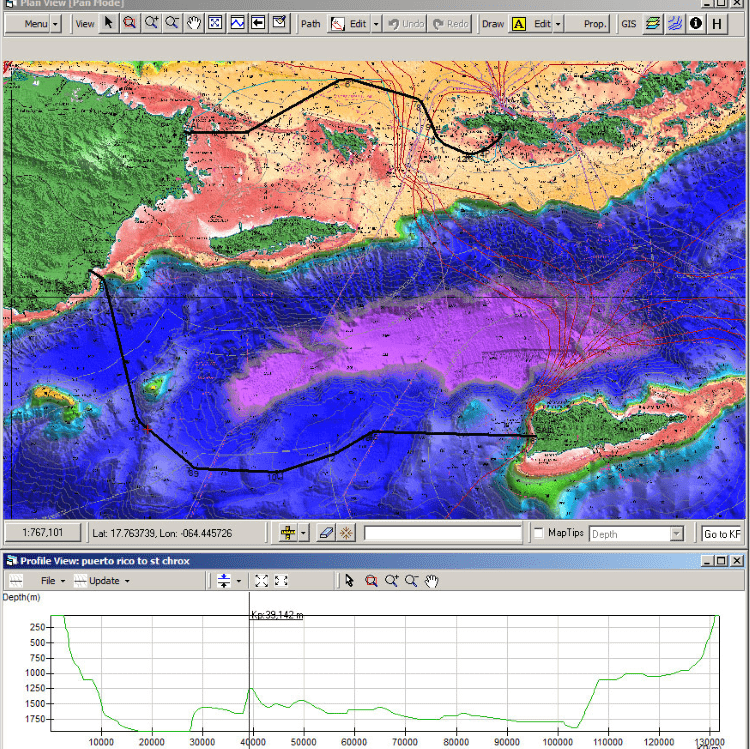
Makai has recently released its Digital Terrain Module for MakaiPlan and MakaiPlan Pro. This module provides the user with a toolset to process and visualize bathymetry data while designing a cable path. Instead of designing a path based on bathymetry contours alone, engineers can now view the surveyed area using shaded relief maps detailed 3D grid maps. For an overview on the features,.
MakaiPlan sales Milestone – December 2003
The submarine cable industry continues to support Makai’s submarine cable planning software, with over 120 licenses of MakaiPlan sold.
Sandwich Isles Communications (SIC) Desktop StudyCompleted - July 2003
Makai was contracted by Parsons Brinckerhoff Quade & Douglass to complete the ocean engineering portions of a fiber optic desktop study for Sandwich Isles Communications. Research included submarine cable route planning which involved the consideration of bathymetry, geology, fisheries, environmental conditions, and hazards/obstructions. In addition, Makai staff conducted dive surveys at potential directional drilling exit sites.
MakaiLay on New ITG Cableships - Jan/Feb 2001 – Underwater Magazine
International Telecom Group, a subsidiary of General Dynamics Advanced Technology Systems, has launched two of its four new subsea cable-laying vessels. The new vessels, Oceanic King and Oceanic Viking, will be working in the Atlantic Ocean installing and maintaining submarine fiber optic cables. These state-of-the-art deepwater cableships each have a complete MakaiLay system.
Laying Cable Along a Target Route - October 2000 – Hydro International
“Conventional cable-lay has been carried out by the cable ship sailing along the planned route. The cable laid in this way often deviates far from the planned route due to the effect of tidal current, etc. … By introducing ICS (Makai’s Integrated Control System), we are now able to lay cable exactly to the target route and to install bodies onto the target in spite of the complexities of current, the configuration of the seabed, and the meandering planned route. Consequently, we have been successful in reducing the possibility of cable failure and in laying a number of seismographic systems which require higher precision in deep water.”
Makai Announces 3 Ocean Technology Patents – November 2012
U.S. Patent and Trademark Office approved three of the Makai’s patent applications for unique systems related to undersea pipes and cables.
“These USTPO patent approvals of Makai Ocean Engineering’s inventions are a grant of intellectual property rights to our local Hawaii-based company,” Vice President Billy Pieper said in a statement. “We want to attract investment that will not only further our research and development, but help to position Hawaii as the world leader when it comes to solving challenges or problems in the ocean.” The patents are briefly described below:
Autonomous Underwater Array Burial System, which provides a means for burying undersea cables to protect them from damage by trawling or ship anchors.
Mist Lift, is an ocean thermal energy conversion concept that simplifies extracting energy from the ocean.
Flange Protection System, helps to protect the large diameter high-density polyethylene (HDPE) pipes used in underwater projects such as seawater air conditioning.
Download the full press release PDF by clicking this link.
Hawaii State of Clean Energy TV Special – October 2012
Hawaii News Now has produced a great clean energy series. Season 2, Episode 2 features Makai’s effort to bring commercial OTEC to Hawaii. It will be airing 9 times on TV and will be available on the website as well.
Please click on the image to the right to visit the Hawaii Energy Policy website at this link to watch the online video on the various energy sources being considered in Hawaii.
Click the link to the left to visit Episode 2 ("Chop Sui Resources": Fueling Our Future: Getting Real on Our Vision) which discusses Makai’s OTEC efforts 13 minutes into the video.
US DoE Water Power Tech Peer Review: Makai’s OTEC model – August 2012
This is the report of the DoE Peer Review for Marine & Hydrokinetic Energy Devices from November 2011. Makai’s Ocean Thermal Energy Conversion (OTEC) Bioplumes project was reviewed: see pages xii and 167.
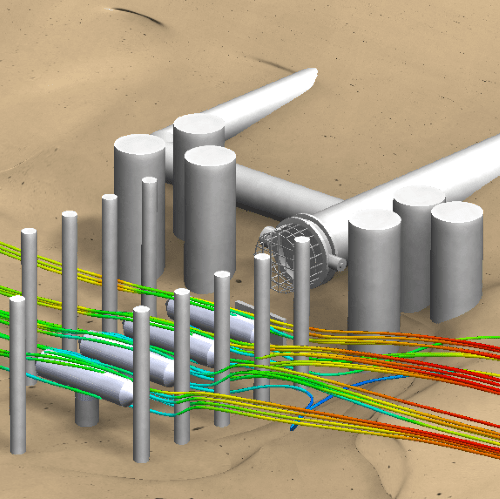
This project is assessing the potential eutrophication impacts from the discharge plume. Developing a plume model is necessary to predict potential reaction from a nutrient rich plume, and this effort is a focused attempt at modeling and analyzing OTEC plumes. The impact of OTEC discharge plumes will be of significant interest to regulators.
Plume Model video – July 2012
This video shows a 3D/4D GIS & scientific visualization software visualizing ocean plume models that vary in time and space for the development of Ocean Thermal Energy Conversion (OTEC) plants. While this modeling and visualization is applied to OTEC, the same techniques are readily applied to assessing tidal, wind, and wave resources.
Makai Voyager is the visualization software framework, which is a global GIS program capable of viewing enormous real-time scientific datasets along with imagery, terrain, 3D objects, LiDAR, and standard GIS (ESRI, etc.) data. This tool is being applied to scientific and engineering analysis in the ocean, as well as for battlespace situational awareness for the US Navy. Capabilities of the software include:
fast, interactive frame rates on standard PCs;
web-based framework for streaming WMS data and performing remote visualizations
global GIS for realistic context
scientific graphing & analysis tools
The software can visualize live ocean models plus ROVs, ships, buoys and other infrastructure or field units in 3D space in very near real-time. And because the software is web-based, there is the possibility of expanding this 3D/4D framework to be accessible via a web portal.
Star Bulletin article on SWAC – June 2012
An article in the Honolulu Star-Advertiser outlines how Honolulu Seawater Air Conditioning (HSWAC) has a plan to save 70 million kWh per year of electricity, create $200M in construction spending, reduce greenhouse gas emissions by 75,000 tons/yr, and save 260 million gal/yr of potable water. And all by using a free and natural resource! The article is restricted to subscribers, but if you are interested please contact duke.hartman@makai.com for a copy.
Pacific Biz news article on Makai – April 20, 2012
Makai was featured in Pacific Business News’ Small Business Strategies this week. Seawater air conditioning (SWAC) is an increasingly popular form of renewable energy using deep cold ocean (or lake) water for cooling. Savings of 90% on cooling electrical costs have been reported by customers. The article is restricted to subscribers, but if you are interested, please contact duke.hartman@makai.com for a copy.
Makai Showcases OTEC at APEC – November 2011
Makai was selected as one of 15 companies to showcase Hawaii’s high technology and renewable energy industries to the leaders of the APEC economies. Here Makai engineer Duke Hartman discusses the potential of OTEC with Hawaii Governor Neil Abercrombie.
Outreach for OTEC Research – Fall 2011
Makai engineer Duke Hartman participated in a local school career fair describing the advantages of using Ocean Thermal Energy Conversion technology as a renewable energy source, and encouraging students to consider a career in science and engineering. The benefits of OTEC can be reviewed.
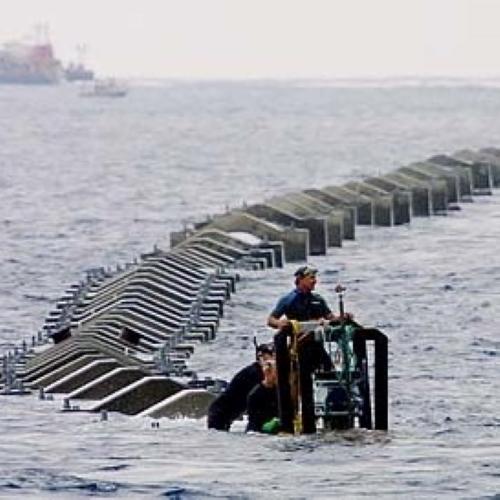
The Dupont outfall pipe was successfully deployed northeast of Wilmington, DE. Commerce Construction delivered the 730 ft-long offshore section, then joined it to the already installed nearshore section, then sank it into a trench using the controlled submergence method.
Makai’s services included consulting on deployment methods, redesign of the pipeweights, and buoyancy/pull calculations.
Makai Contributes to Two National Awards – Spring 2011
A unique submerged buoyant HDPE pipeline modeled by Makai for Lake Oswego, Oregon and Brown and Caldwell Engineering has won two national awards. The Plastic Pipe Institute declared the Lake Oswego Sewer Interceptor Project as its Municipal Project of the Year, and the Association of General Contractors awarded their 2011 Grand Award to Advanced American Construction, Inc. for their work assembling the project.
OTEC Heat Exchanger Test Facility – Fall 2010
Makai has completed construction of an OTEC heat exchanger test facility at the Natural Energy Laboratory of Hawaii (NELHA) on the Big Island of Hawaii. The test facility is a 40 foot tall tower that supports evaporators, condensers, seawater piping, and an accurately instrumented ammonia working fluid piping system. NAVFAC and ONR sponsored the facility as a cost-effective means to test the performance of modular heat exchangers on land using NELHA’s existing seawater pipe infrastructure. In general, OTEC will be most cost-effective when installed as large floating offshore platforms.
OTEC Hydrodynamic Plume Modeling – Fall 2010
Makai successfully completed a numerical hydrodynamic model to simulate the large discharges of OTEC plants in the ocean environment. The 3D-hydrodynamic model is based on the EPA-approved Environmental Fluid Dynamics Code (EFDC), and receives realistic oceanographic currents and density data supplied by the Hawaii Regional Ocean Modeling System (ROMS). Dynamically coupled finite-element jet-plume models simulate the entrainment and turbulent mixing of large OTEC plumes. This is the most realistic OTEC plume model ever developed. Work is beginning to include a simulate bio-stimulation that may occur due to the nutrient-rich discharges. This follow-on work is funded by DOE and Makai, with a generous cost-share from Lockheed Martin.
Makai Tests a Major OTEC Engineering Challenge – Summer 2010
Makai is a key subcontractor for Lockheed Martin’s OTEC Pilot Plant design work for the Naval Facilities Engineering Command (NAVFAC). Makai was tasked with a major engineering challenge of how to safely grip and lower a large 10 meter diameter, 1000 meter long, coldwater pipe, while it was being constructed from a floating OTEC plant. Makai designed a system to accomplish this task and constructed and successfully tested a 1/20th scale model of this system.
SBA Honors Makai for Excellence – Spring 2010
The Small Business Administration honored Makai Ocean Engineering for their work in the federal government contracting arena. Makai was nominated for their "outstanding performance, innovative solutions, professionalism, cost effectiveness and on-time delivery by the federal agencies that contracted their services." Makai Ocean Engineering was named the Prime Contractor of the Year for the SBA’s Western region.
Development of Mist Lift: a Cost Breakthrough for OTEC – Spring 2010
Makai has received a Department of Energy, SBIR Phase I award for a conceptual design and modeling of an offshore 100MW Mist Lift Open Cycle OTEC plant to determine overall economic benefits, risks, and R&D requirements. Mist Lift is a boldly different approach to Ocean Thermal Energy Conversion process that was invented by Dr. Stuart Ridgeway in 1977. Mist Lift is a form of open cycle OTEC that does not use heat exchangers, does not have large seawater pumps and which generates power with a simple water turbine. With fewer costly components, it has the potential to be less expensive to build and operate.
Optimizing OTEC Environmental Sustainability – Fall 2009
The National Defense Center of Excellence for Research in Ocean Sciences (CEROS) has funded Makai to develop a toolset of analytical and numerical programs to be used during OTEC design that will provide sustainability feedback by effectively simulating the circulation, temperatures, and nutrients around single or multiple OTEC plants, while producing power at the lowest possible cost. The final toolset will include an OTEC plant model which will manage flows, temperatures, plant geometries, power, and will optimize the plant configuration based on cost. The OTEC plant model will receive feedback from the hydrodynamic performance predicted by an OTEC 3-D hydrodynamic plume model which will model seawater intakes, discharges, velocity, near-field mixing and turbulence, and which will, in turn, be driven by boundary conditions generated by a Regional Ocean Hydrodynamic Model (HIROM).
Conceptual SWAC Analysis for Bermuda – Fall 2009
In August of 2009, Makai completed a Conceptual Design and Cost Study for a Seawater Air Conditioning and Bottoming Cycle Power System for Hamilton, Bermuda. This study was sponsored by BAC Engineering, a division of Bermuda Air Conditioning Limited. The goal was to provide a conceptual level technical analysis and cost estimate for a large SWAC system with intake pipelines centered off the southern coastline of Bermuda. The system included a novel re-use of the still cool SWAC discharge water in a bottom cycle power application that took advantage of waste heat available from power generation activities at Bermuda Electric Light Company, Ltd.
Preliminary SWAC & OTEC Analysis – New Caledonia – Fall 2009
Working as a subcontractor to Genie & Technologies Industriels of Noumea, New Caledonia, Makai recently completed an evaluation of the potential of Seawater Air Conditioning (SWAC) for space cooling and Ocean Thermal Energy Conversion (OTEC) for electrical energy production in the development of a new coastal resort in New Caledonia. The new resort was to be located within an exclusive site called Gouaro Deva on the south coast of New Caledonia, about 2 hours by car from Noumea. The scope of Makai’s work was a pre-design evaluation focusing on development of a concept design, thermal and hydraulic analysis of the required intake and discharge pipelines and an associated cost analysis for the offshore pipeline components.
Conceptual Power Cable Design for an OTEC Plant – Fall 2009
The Department of Energy has awarded Makai Ocean Engineering a SBIR Phase I contract to perform a conceptual configuration design, cable route, cable deployment and preliminary electrical and mechanical cable specifications for dynamic cables that could supply OTEC generated electrical power to shore. Today, there are no high voltage, deep water, dynamic power cables available that are suitable for connecting to a large offshore OTEC plant. Numerous technical issues currently impede the design and development of this high power submarine cable that can withstand the regular movement associated with a moored floating OTEC plant.
OTEC Heat Exchanger Design and Testing – Summer 2009
Makai is working toward the development of a low-cost heat exchanger for commercial OTEC power plants. The project involves various efforts to design and test the overall performance of heat exchangers based on their corrosion characteristics, manufacturability, fluid dynamic losses and thermodynamic performance. This project is being funded by the Naval Facilities Engineering Command (NAVFAC), Office of Naval Research (ONR), Hawaii Natural Energy Institute (HNEI) and the Hawaii Technology Development Venture (HTDV). Makai is currently designing and beginning construction of the test facility at the Natural Energy Laboratory of Hawaii Authority (NELHA) on the Big Island of Hawaii. The Makai design team, along with the parallel efforts of Lockheed Martin Co., will develop and test several 50 kW OTEC heat exchanger prototypes during a 2-year period.
Feasibility Assessment for OTEC on Guam – Spring 2009
The Naval Facilities Engineering Command has contracted Makai to perform a Feasibility Assessment for Ocean Thermal Energy Conversion (OTEC) on Guam. The island is scheduled to undergo significant military expansion which will require Guam Power Authority to increase their electrical generating capacity. OTEC would be able to provide 24/7 electrical power from a renewable source – the stored warmth of the tropical ocean.
Lockheed Press Release on OTEC – Fall 2008
Lockheed Martin has been awarded a cooperative agreement contract with a maximum value of $1.2 million by the U.S. Department of Energy (DOE) to demonstrate innovative technologies to enable ocean thermal energy power generation. Makai has a 30 year history of working with Lockheed on OTEC technology and is applying new solutions to old problems.
OTEC (Ocean Thermal Energy Conversion) – Summer 2008
As part of our SBIR study on Ocean Thermal Energy Conversion, Makai has entered into a teaming agreement with Lockheed Martin. Lockheed will assist in the final Phase of this SBIR with evaluation of important configuration alternatives and generating plans for the future. Beyond the SBIR, The OTEC plan has expanded considerably with Lockheed taking the lead. Makai as a subcontractor is assisting Lockheed on the engineering of the platform, cold water pipe, heat exchangers and plant configuration including the planning for a first commercial OTEC plant.
HSWAC’s Final Design – June 2008
Makai has signed a contract to provide final design engineering services to Honolulu Seawater Air Conditioning LLC, a subsidiary of Ever-Green Energy of St. Paul, Minnesota. The overall goal of this ambitious project is to provide 22,500 tons of air conditioning to downtown Honolulu commercial and government buildings. Makai will be responsible for the design of the large diameter deep water intake pipeline from 45′ (13.7m) depth to the intake depth at 1750′ (534m) stretching over a length of approximately 25,000 feet (7621m). Makai’s responsibilities will also include the design of a companion shallow water return water discharge pipe to a depth of at least 120′ (36.5m). It is anticipated that construction bidding on the offshore portion of this project will commence before the end of 2008.
Piscadera Seawater Air Conditioning System – Final Design Completion – March 2008
In March of 2008, Makai completed the final design for the deep seawater intake pipeline, the return water pipeline and the pump station mechanical plant for a seawater air conditioning system to be built in the Piscadera region on the Caribbean Island of Curacao. This 3000 ton air conditioning system will supply cooling to 4 hotels and a power plant. A 915mm, 6 kilometer long intake pipeline extending to an intake depth of 850m has been designed, and construction is anticipated in late 2008.
Oswego Lake Interceptor Sewer Upgrade Final Design – January 2008
For several years Makai has been working in a collaborative design role with Brown and Caldwell of Portland, Oregon in the design of a unique floating sewer interceptor pipeline. This high density polyethylene pipeline will be the world’s first submerged floating gravity flow sewage interceptor system. It will be installed down the length of Lake Oswego, outside of Portland, Oregon. It will replace an aging pile mounted concrete pipeline that has been found to be susceptible to seismic damage. The new pipeline will be held in place by anchored pendants attached to the bedrock below the lake floor. Makai has been responsible for modeling the entire HDPE pipeline under various design loading scenarios including thermal variations, lake drawdown events and seismic events and general consultation on HDPE design and constructability issues. Construction of this project is due to begin in Fall 2008.
Rose Island SWAC – Summer 2007
Makai was contracted by X-nth, Inc. to perform a preliminary study of the potential for using Sea Water Air Conditioning (SWAC) on Rose Island, Bahamas.
Deep water mooring design – Summer 2007
Makai was contracted by Fishing Island, Inc. to design a single point mooring in a water depth of 6,000 feet, 3 miles offshore of Kailua Kona, Hawaii.
Hydrothermal Cooling – Summer 2007
The Economist in their June 7th, 2007 edition published a story regarding the City of Toronto using deep cold water from Lake Ontario to cool office and apartment buildings. Makai designed the deployment procedure critical to installing the pipelines to 83 meters depth.
The world’s first commercial deep seawater air-conditioning system (SWAC) – Summer 2007
On May 1st, 2006, the InterContinental Resort and Thalasso Spa Bora Bora, began operating the world’s first commercial deep seawater air-conditioning system, designed by Makai Ocean Engineering, Inc. The new hotel’s pipeline supplies frigid 5°C (41°F) pure seawater from 900 meters (2950 feet) deep to eliminate typical air conditioner machinery driven by large electric motors. The system will save approximately $400,000 of electricity each year, a 90% energy reduction.
Makai to design a SWAC system for Curacao - September, 2006
SeaCon International has awarded Makai a Sea Water Air Conditioning system design for Curacao.
Conceptual Design for a Deep Ocean Pipeline in Mauritius - July, 2006
The Mauritius Research Council has contracted Makai to perform "A Conceptual Design and Economic Assessment for a Deep Ocean Intake Pipeline and Return Water Pipeline Within the Context of Land-Based Oceanic Industry, Republic of Mauritius". Seen to the left is Makai engineer Dale Jensen briefing the Mauritius Broadcasting Corporation on the scope of the project and divers performing a preliminary survey of the site.
Preliminary Design for a Deep Ocean Pipeline in the Republic of Korea - January, 2006
Makai has been awarded a contract to offer design services for a deep ocean intake and return water pipeline for The Blue Ocean World Project located in the Republic of Korea. The primary use will be for bottling deep ocean drinking water.
Marine Technology Society Award - September, 2005
Makai Ocean Engineering received the Compass Distinguished Industrial Award for outstanding work in marine technology and recognizing Makai’s work in deep sea cables and pipelines. The award was presented in September, 2005, at the Marine Technology Society meeting – part of the OCEANS conference in Washington, DC.
OTEC Conceptual Study Recommended for Phase II Work – August 2005
The Office of Naval Research Small Business Innovation Research Office has recommended Makai Ocean Engineering perform the 2nd phase of a study titled: "Integration and Optimization of Hydrogen Production with Ocean Thermal Energy Conversion (OTEC) Technology in Offshore Floating Platforms."
Seawater Air Conditioning Feasibility for Islands - August 2005
Makai recently finished seawater air conditioning feasibility studies for Tahiti Electric Company & Guam Power Authority.
Honolulu Seawater Air Conditioning featured on Environmental News Network - April 5, 2005
The Environmental News Network covers an Associated Press story about Honolulu Seawater Air Conditioning. This renewable energy system will use a deep seawater intake pipeline to cool buildings throughout downtown Honolulu with the equivalent of 25,000 tons of ice per day. Honolulu SWAC will cut electricity & pollution by 70%compared to today’s air conditioning.
Intercontinental Resort Bora Bora – December 2004
Makai is providing design and construction management services to InterContinental Resort and Thalasso Spa Bora Bora for the Sea Water Air Conditioning system featured at the exclusive resort. The ocean pipeline will provide cold, very pure seawater from 850 meters deep. Pipeline assembly is in progress.
The AC of Tomorrow? Tapping Deep Water for Cooling September 10, 2004
Click Here to read the National Geographic News story describing Deep Lake Water Air Conditioning at Toronto, Cornell University and the Natural Energy Laboratory of Hawaii.
Deep Outfall Complete at Everett WA – August 2004
Makai Ocean Engineering performed the design and construction observation of a 350′ deep outfall pipeline for The City of Everett and the Kimberly-Clark Company. Completed on time and under budget, the multi-diffuser outfall has 80 ports easily opened by an ROV.
Pipelines Installed for Enwave Deep Lake Water Cooling – August 27, 2003
Enwave to launch $180m energy project for the City of Toronto
The three deep water intake pipelines for the $180 million project to provide environmentally friendly cooling to Toronto’s downtown core have been installed. Each pipeline is 5 km long and 1.6 meters in diameter. Enwave Deep Lake Water Cooling Solutions ™ will draw cold water from Lake Ontario to air condition downtown buildings. Makai Ocean Engineering, Inc. determined anchoring requirements, assisted in the design and provided deployment analysis and specifications for these pipelines.
HOST Park 55" Pipeline Wins National Award -April 4, 2003
The HOST Park Seawater Supply Pipeline, the world’s deepest large diameter seawater intake pipeline, was selected as one of six finalists for the 2003 Outstanding Civil Engineering Achievement (OCEA) Award by the American Society of Civil Engineers. The survey, conceptual and final design, and construction observation for this project was performed by Makai Ocean Engineering.
OTEC Modeling Project Chosen by Office of Naval Research – November 14, 2002
The ONR Small Business Innovation Research Office has selected Makai Ocean Engineering to perform a study for Systems Integration of an Integrated Ocean Thermal Energy Conversion (OTEC) Plant. The study will build upon Makai’s existing deep water air-conditioning modeling program.
Pipeline for Cornell University Still in the News – ASHRAE Journal - April 2002
The cover story of the American Society of Heating, Refrigeration and Air Conditioning Engineers showed Makai’s pipeline (designed during 1999) being towed to its installation on Cayuga Lake.
Also, Cornell University will win a unique award from the Ecological Society of America for this "green" renewable energy project that cuts electricity use by 87%.
3,000 Feet Under the Sea - The Insider, published by The Plastics Pipe Institute – Winter 2002
The world’s longest and deepest cold seawater intake was installed October 11 and 12, 2001 at Keahole Pt., Hawaii.
In a 3-day assembly and deployment operation, the flanged sections were joined into one 9,000′-long pipe segment, towed 27 miles and deployed using a controlled submergence process… Engineers from NELHA‘s consultant, Makai Ocean Engineering, Inc. chose about 10,000 feet of HDPE pipe in 55-inch and 63-inch diameters.
Makai-Designed Pipeline Earns Outstanding Engineering Achievement Award -June 25, 2001
The Lake Source Cooling Project at Cornell University has been selected as the New York State Society of Professional Engineer’s 2001 Outstanding Engineering Achievement. This award recognizes outstanding engineering achievements that have captured the innovative and dynamic spirit of a profession dedicated to public service.
Natural Resources: University Turns to Nearby Lake for Cooling, Reduces Energy Use by 87 Percent - District Energy Magazine – 2nd Quarter 2001
By W.S. Joyce, PE, Cornell University.
The Lake Source Cooling (LSC) project at Cornell University uses a renewable resource – the deep, cold waters of nearby Cayuga Lake – as a noncontact cooling source for the campus chilled water system. The $58 million project began providing 16,000 tons of cooling to 4 million sq ft, or about 40 percent, of the campus in July 2000, with an 87 percent reduction in energy use compared to conventional cooling alternatives. The overall environmental benefits included a 20 million kWh/year reduction in electricity use, reduced coal combustion, and associated reductions in CO2 emissions and acid rain precursors.
In The Drink – Cities Try Cooling off with Deep Lake Water - October 1999 – Scientific American
Cornell University has embarked on a $55 million project called Lake Source Cooling, which by mid-2000 will reduce their energy consumption for air-conditioning by 80 percent. The university’s present chilled-water system relies heavily on ozone-depleting chlorofluorocarbons, whose manufacture was banned in 1996.
Hawaii-based Makai Ocean Engineering designed the pipelines at Ithaca and Keahole Point.
Ithaca is the only site where a deep water cooling project has provoked significant, though not widespread, protest-most of it, ironically, on environmental grounds. Those problems are misconceptions, according to Ithaca College biologist John Confer. The most important aspect of the project, Confer wrote in the Ithaca Journal, "is that it would set a national example for reducing global warming."